
The Greville Primary School Inspire, nurture, achieve
Zones of Regulation
What are the Zones of Regulation?

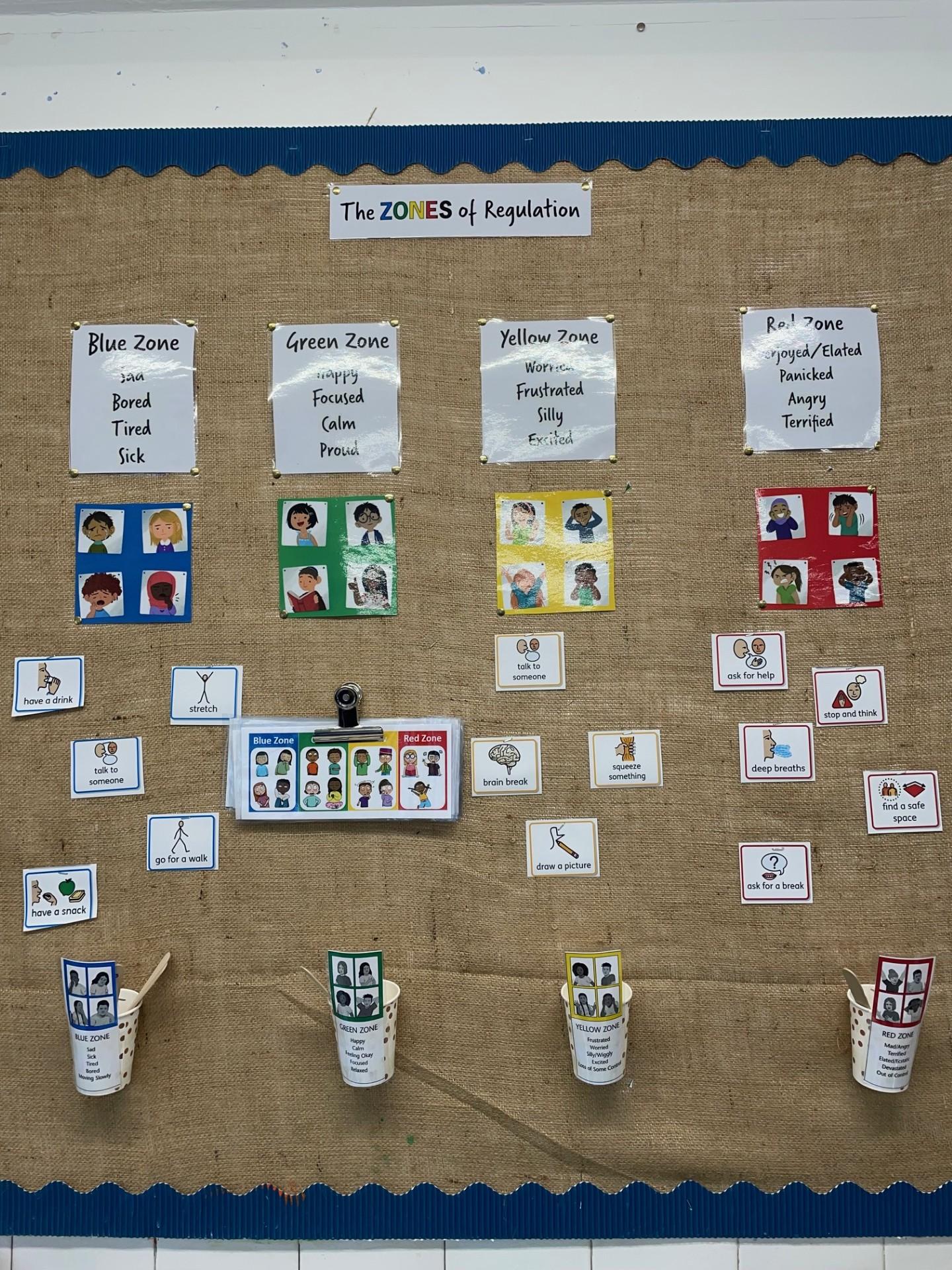
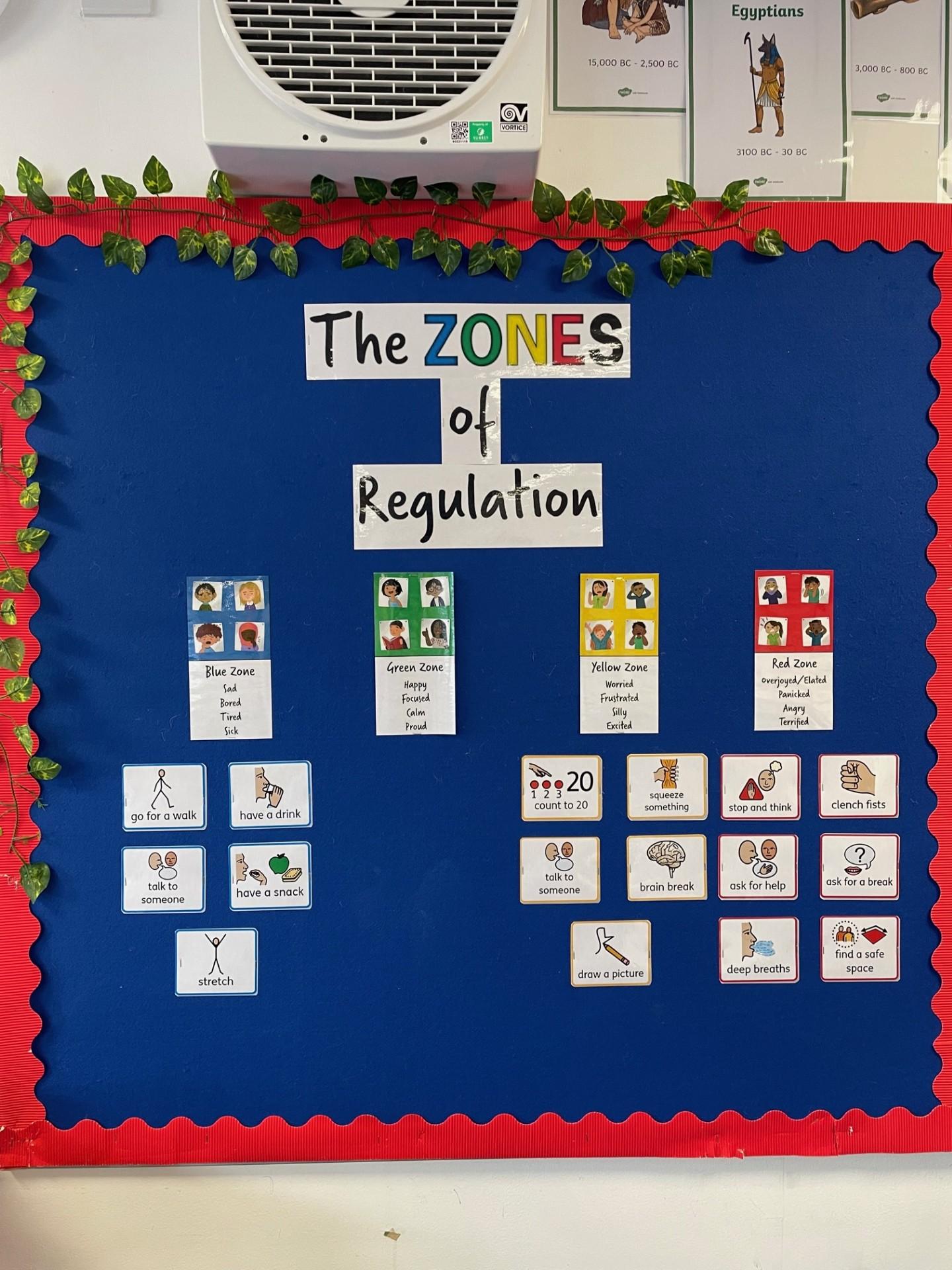
Learning to identify and regulate emotions is a big job, especially for young children! At The Greville, we have made it a priority to ensure all of our children learn how to identify and manage the range of emotions that they will experience over a school day. The Zones of Regulation is a model that teaches the children to link emotions to colours based on their level of alertness.
Blue Zone - low state of alertness our bodies are running slow (sad, tired, bored or sick)
Green Zone - feeling in control of our bodies (calm, happy, focused and ready to learn)
Yellow Zone - heightened state of alertness (anxious, silly, frustrated, excited or nervous)
Red Zone - high state of alertness, body is feeling out of control (angry, elated, terrified)
What does this look like in school
At the beginning of every academic year, the children take part in 18 Zones of Regulation sessions which aim to teach the children about identifying emotions, how their body feels when experiencing these emotions, what triggers they might have, how their behaviour can affect others around them and finally the tools that they can use to remain regulated.
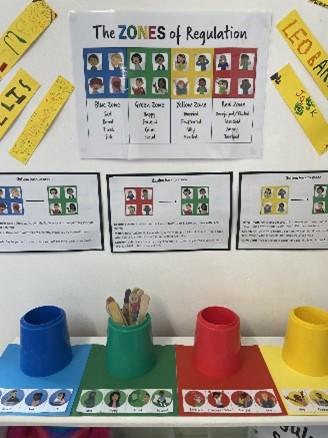
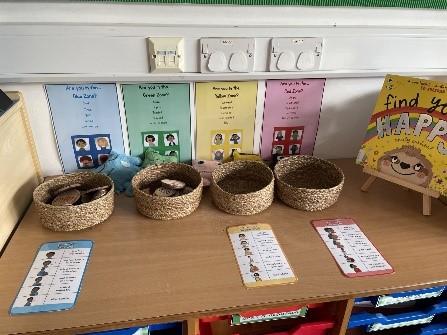
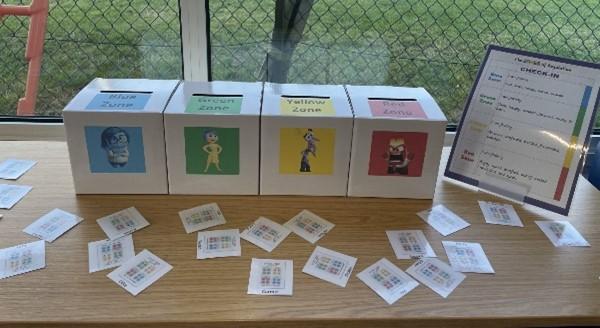
Each classroom has a Zones of Regulation display which acts as a visual reminder for the children. Each class teacher has also come up with their own way of getting the children to 'check in' with their emotions. This check in happens twice a day where the children are encouraged to think about how they are feeling. It also allows our teachers to speak with their children about these feelings and support them with strategies they can use to get back to the green zone.
How you can help at home
- Identify your own feelings using Zones language in front of your child (e.g. "I'm feeling frustrated this morning. I think I am in the Yellow Zone.")
- Talk about what tool you will use to be in the appropriate Zone (e.g. "I need to take four deep breath to help get me back to the Green Zone.")
- At times, wonder which Zone your child is in. Or, discuss which Zone a character in a film/ book might be in. (e.g. "You look sleepy. I wonder if you are in the Blue Zone.)
- Engage your child is discussion around the different Zones when they are calm and in the Green Zone - talk about what their bodies might be doing.
- When dealing with a behaviour outburst, support your child to regulate their feelings before you respond to their behaviour and discuss strategies for next time.
For example: If your child is angry and has hurt their sibling:
1. Empathise with them and validate what they are feeling.
2. Help them calm down using a strategy.
3. When they are out of the red zone, talking to them about their behaviour, give consequences if appropriate, and then identify what they should do next time they feel angry.
- Create a calm box for your child to use when they feel as if they are reaching the yellow or red zones.
Suggestions for a calm box

- Picture cards of sensory break ideas - stretching, star jumps, wall pushes, hand squeezes
- Something to touch (soft toy animal, stress ball, pot of slime/ putty)
- Something to hear (small musical instrument, rain maker, musical box)
- Something to see (photographs of special memories, snow globe, sand timer, sensory bottle)
- Something to smell (lavender bag, sensory oils)
- Distraction activity (puzzle, colouring book, wordsearch, sudoku)
- Breathing reminders (hot chocolate breaths, lazy 8 etc.)